

Introduction
Hello (again) world!
This website has sat dormant for the last 7 years since I finished hiking the Pacific Crest Trail. While not quite as outdoor-oriented, my life since then has been pretty exciting and fulfilling, but I’ve become incredibly bad at documenting any of it. Today I attempt to rectify that and start writing in long form again.
I’ve spent a lot of time recently creating music with a lot of other folks across maybe a dozen different traditions, some of which have seemingly little to do with each other, from Appalachia to the Alps to the British Isles. I’d like to use this space now to share some of these experiences, and maybe some of my uninformed observations about how they all fit together.
I will start this new iteration of this site with a chronicle of a trip I took with my partner Theresa across Ireland about a month ago (early June 2026). We had about five days to follow arbitrary leads in search of the most genuine folk experiences we could find.
Background (pre June 2026)
I’d been to Ireland a couple of times before, once to run a half marathon in Kerry, and once for weekend trip in Dublin. Neither time was music the focus, but I still noticed how seemingly every pub had live music, even if it was just one or two people with a guitar. Each time I remember thinking, wouldn’t pubs in London (where I lived at the time) be so much nicer if this was a thing? Theresa had never been to Ireland, but had heard a lot about the musical traditions there and felt she was due for a visit.
Making music together is a big part of our relationship – mostly singing in harmony with some light guitar accompaniment. The last three years (and for me, several years before that), we’ve attended a folk music festival in Wales called Fire In The Mountain. A bit hippie, a bit druidy, and very lovely. The performances are always great and unexpected, but really what makes this festival special is all of the opportunities to make music with people you’ve just met and who maybe bring their own traditions with them.
There are a few songs I now consider to be part of my repertoire which I learned aurally at the festival from people who maybe learned them aurally somewhere else, and so on. To me that’s what folk music is about – it’s not a genre per se, since folk music from North Carolina sounds very different from that of Latvia, but it describes how music is shared and how it holds people together across time and space. When I sing Sam Hall, a song I learned at last year’s festival about an unrepentant chimney sweep condemned to hang for robbing the rich to feed the poor, I feel as though I am just the most recent steward of his tale, dating back to the true story it is based on in 1707 (he was actually named Jack Hall – his name changed to Sam 150 years later).
One of the most popular acts at last year’s festival was Ye Vagabonds, consisting of two brothers plus one other from Ireland playing and singing beautiful traditional and modern Irish music on various stringed instruments and squeeze boxes (think accordion, but more Celtic). Their main performance was captivating and delicate, as I knew it would be from having listened to their music over the last several years. The next day, they hosted a singing workshop around a fire pit, in which they taught the participants a song they had picked up from the island where their mother had grown up. The song was all in Gaelic, but is about a piper singing to his one true love, who is listing a long set of more sensible suiters who would be able to provide for her with their steady incomes. In response to each one, he essentially says “But wouldn’t you have more fun being with me, the piper, who will always fill your life with music?”
It was a nice sentiment to the song, but amid all the festival haze, we could only remember a few scant details about it when we decided to travel to Ireland after the festival. We remembered that the island was called Aran Island, that one of the brothers had actually learned it from doing a post-school internship at the Irish Traditional Music Archive in Dublin, and that it was either written or sung in its present form by this old woman on the island who died several decades ago. Between those three fuzzy facts, that seemed like enough of a thread to pull on on our journey after the 2026 edition of the festival.
Dublin / McNeill’s Pub
After the festival ended on the Monday, we made our way to Holyhead, from where the ferry to Dublin leaves, and stayed the night there. We arrived in Dublin on Tuesday late morning, checked into our hotel, and did a little guided walking tour of Dublin. After dinner, we headed to McNeill’s Pub on Capel Street, on the recommendation of one of Theresa’s childhood friends in Germany, who had been there on tour with her own folk band 15+ years earlier.
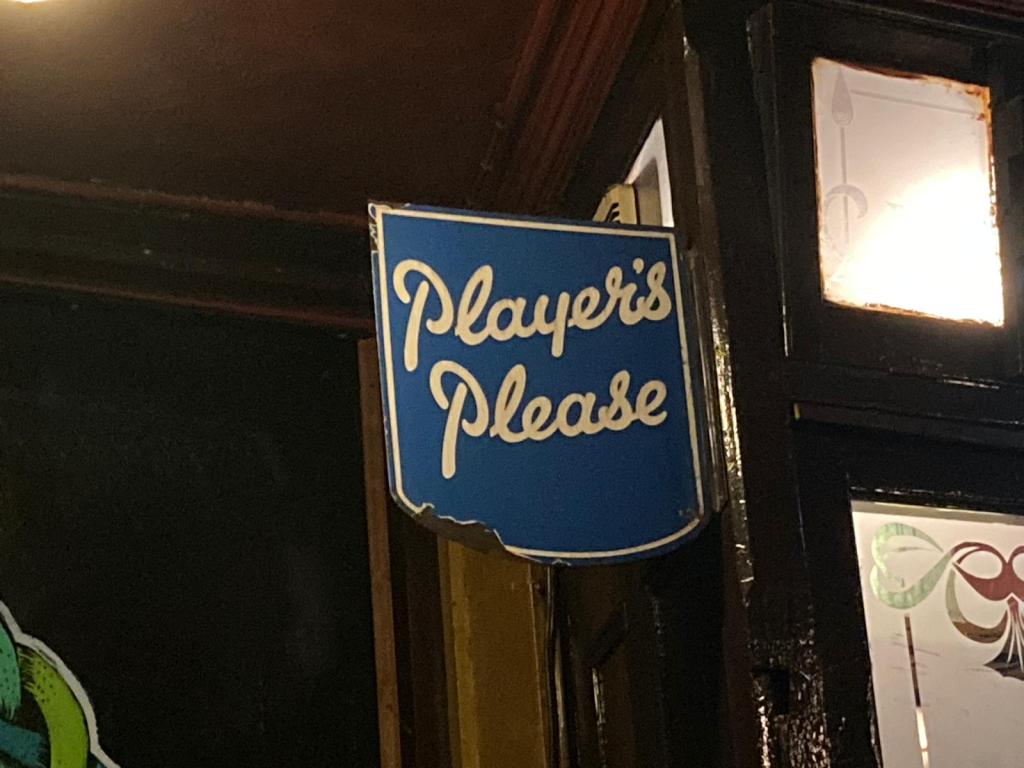
There was an advertised trad session from 9 to 11 that night. We didn’t know exactly what that meant, so I brought my guitar to see if there would be a way to participate in that. As soon as we walked in the bar with a guitar, everyone at the bar, even the drunks, turned and started asking if we were going to play for them. Not in a remotely heckling way – it’s just so expected and appreciated that there will be live music in the pub, especially on Capel Street, which I later learned is a bit of a center for this. I played a few crowd pleasers for the bar denizens.
I was in the middle of singing Sweet Home Alabama (a request from the bar), when the two scheduled musicians arrived and sat down next to us at our table. They were there to play instrumental trad music (i.e. fast-paced jigs and reels) on the melodeon (like a small accordion) and the flute. I asked if I could play along with them, and having just heard me belting out bar classics, they were initially skeptical that I’d be able to keep up on Irish trad songs that I’d never heard before. I assured them that I had some experience doing this, so they gave me a shot and fortunately I made good on my assurances, and was welcomed to play the whole time with them.
Maybe skip this next paragraph if you aren’t a musician:
Playing guitar in an Irish trad session is an interesting and challenging experience if you don’t know the tunes. The two other musicians were playing fast-paced melodies in unison, so I only had the pitches and articulations of the notes they were playing to try to pick out the right chord to play. For any given line of music, there may be three or four chords which would fit harmonically. As the only guitarist in the session, it’s challenging to not have anyone else to follow, but it also gives you the flexibility to pick which of those three or four chords to play, and maybe to choose different chords on the repeats. It actually gives the guitarist, who is just playing basic chords, a lot of power to create tension and resolution at different points in the tune. I really enjoy doing that, which hopefully doesn’t piss off the melodic instruments in my vicinity.
Every now and then, they (plus me) would take a short break and offer to let Theresa and me sing one. Here’s a very short video of I’m A Rover (traditional, but in the style of Ye Vagabonds) that someone in the bar took. Really wish she’d filmed longer.
During another break, someone else sang The Rocky Road to Dublin, famous for its very many words (c. 500).
A couple observations from the evening:
- It’s a little hard to tell from the video above because it’s taken from the bar where most people were, but when Theresa and I were singing, everyone else was silent and paying attention (you can see this from the people in the background). I personally think we sounded pretty good, but I think it’s more indicative of the cultural respect for music: If someone is singing and it isn’t you, you should be listening.
- I’m sure there must be some somewhere in Ireland, but throughout our travels, I didn’t see a single stage. All the performances we saw were in pubs, and the musicians were sitting down at tables in the bar with a Guinness, just like everyone else. Sometimes the tables and chairs were arranged such that clearly the musicians were meant to be the center of attention, but still they always played seated at their tables. To me, this signals that there isn’t a hierarchy between the musicians and the audience. Rather, it’s a shared activity between all denizens at the bar; some are just playing the role of musician, and some are playing the role of audience member.
Dublin / Irish Traditional Music Archive
The next morning, we picked up our rental car, and headed to the Irish Traditional Music Archive in Dublin. We had no idea what to expect there, but we thought it would be good to discover whatever Brían Mac Gloinn (one of the brothers from Ye Vagabonds) had discovered there during his Work Experience, and then head off to the Aran Islands, which are just off the coast of Galway, to hopefully discover the music of this old woman that Brían had shared. (Since you’ll be reading his name several times below, might as well have your internal monologue more correctly say it as “Breeyin” rather than English “Brian”).
The ITMA is quite a non-descript unit in a long row of houses. There’s a little placard by the door and you have to ring a doorbell to be let in. Certainly it’s not a tourist destination.
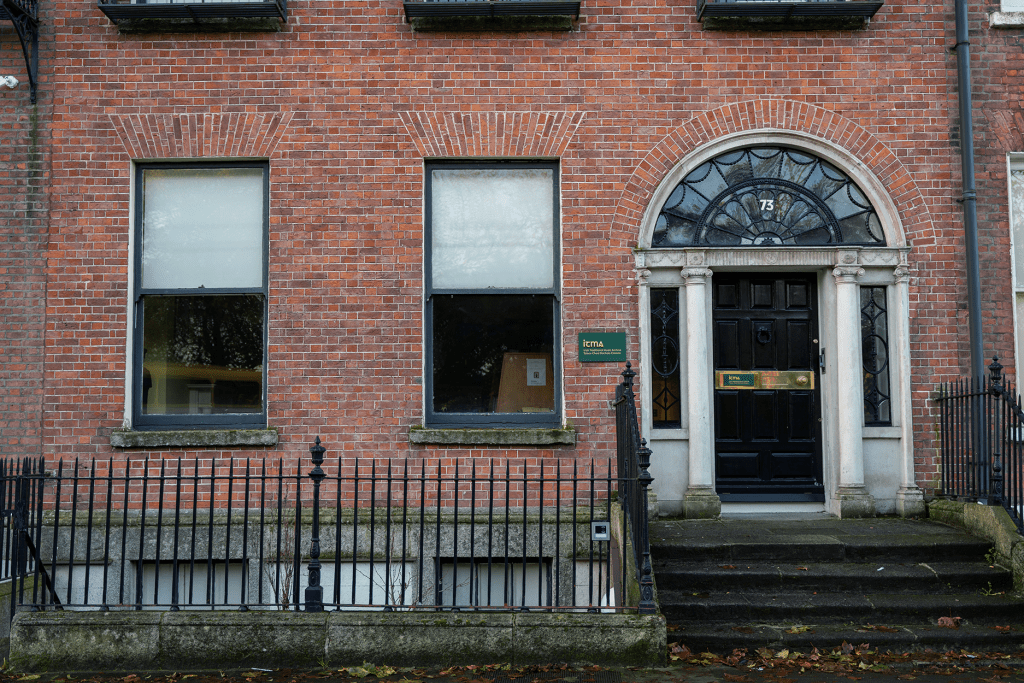
As we walk in, we see portraits of a half dozen musicians along the wall, including our very own Brían, so this feels promising. An Irishman maybe 5-10 years older than us is walking up the stairs at the same time as us and we relate to him our story (basically everything you’ve just read about). He says he knows exactly what we’re talking about, so when we get into the main room of the archive, he opens one of their computers and pulls up a long blog post that Brían had written about the music of Aran Island, and his own journey of discovering it back in Covid times. This is published on ITMA’s website, and I highly recommend a read, and a listen to his embedded audio links: https://www.itma.ie/drawingfromthewell/brian_mac_gloinn/
If you do read it, you’ll quickly notice, as we did, that it’s actually about Arranmore Island in County Donegal in Northwest Ireland, rather than about the Aran Islands which are actually off the central-west coast. Fortunately, because we typically travel by the seat of our pants, we hadn’t booked anything yet for that night on or around the Aran Islands, so this wasn’t so much of a change of plans as it was a change of intentions.
There are a few important things we took away from Brían’s article, aside from the correct identity of the island:
- The music of Arranmore is very vocal-oriented, often unaccompanied, rather than the reels and jigs most people associate with traditional Irish music. I’m not sure if this is a regional distinction compared to the rest of Ireland, or if really most Irish music is vocal, but the fiddle music is what became popular.
- The woman who wrote/collected the song about the Piper (“Ceol a’ Phíobaire”) was named Róise Rua (1879-1964) (Róise is pronounced like Rosha and Rua is how you’d expect, but roll your Rs slightly). She was essentially a musical matriarch of the island (of about 400 year-round residents). Everyone knew her, and she was often in public spaces singing songs she had written or collected. She never formally recorded any music, though she was recorded live by the some folklorists in 1953. There are links to this on Brían’s blog, though they won’t play for me now, so maybe you have to be in Ireland to listen. For the last few years, there’s been a festival there in mid May celebrating the music of Róise Rua and of the island more generally.
- Brían’s principal guide in his own project was an old man named Andrew Early, who unfortunately died as Brían was wrapping up his research, but who knew Roíse when he was a boy and she was an old woman. In my own reading, Andrew seems to have inherited Roíse’s title as the folkloric patriarch of the island. That said, one of my big takeaways from this trip is that folk music in Ireland is extremely egalitarian and community-focused, so any potential readers of this blog from Arranmore (or Ireland more generally) might find it outrageous that I’ve bestowed these titles on individual musicians.
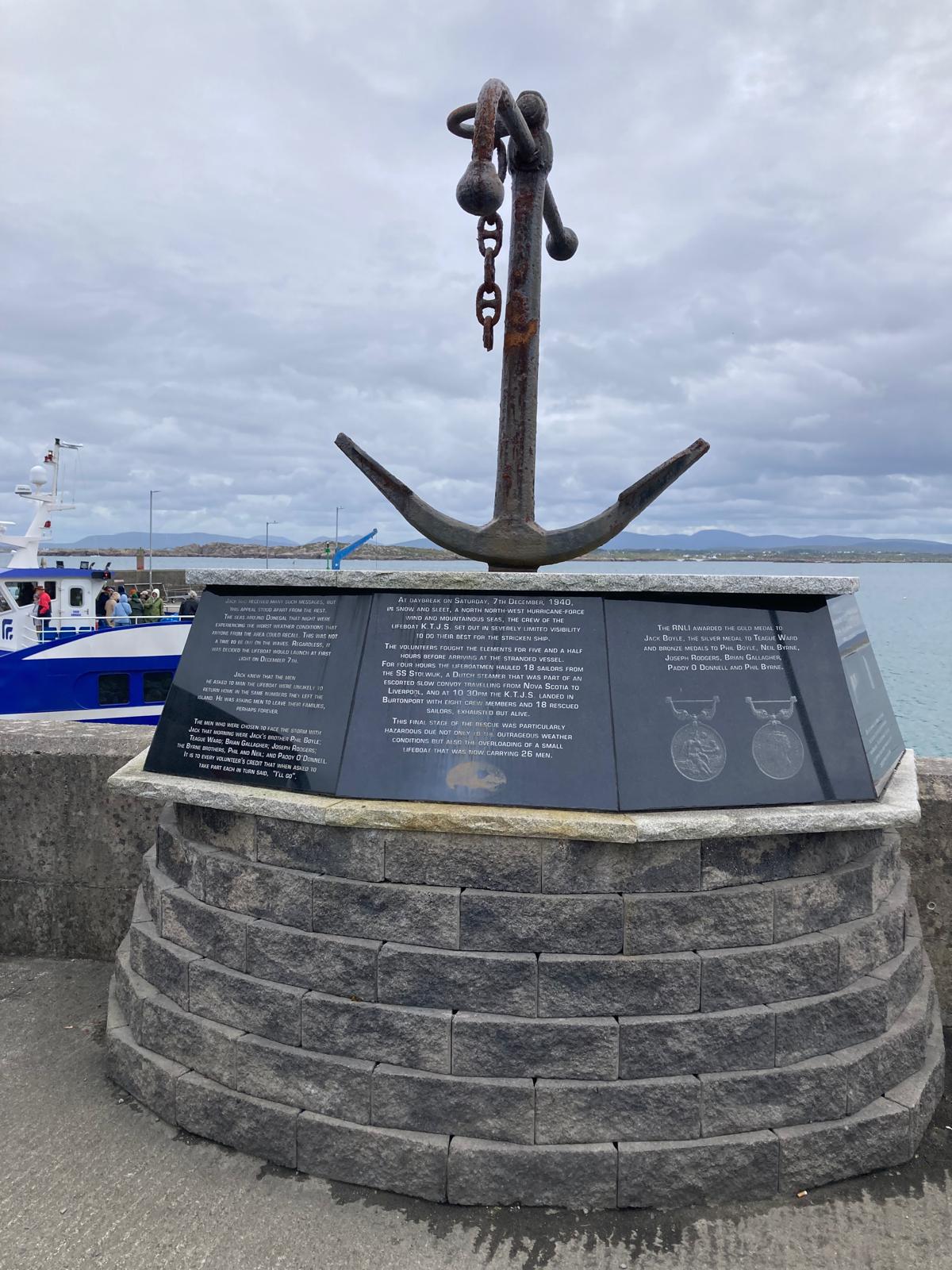
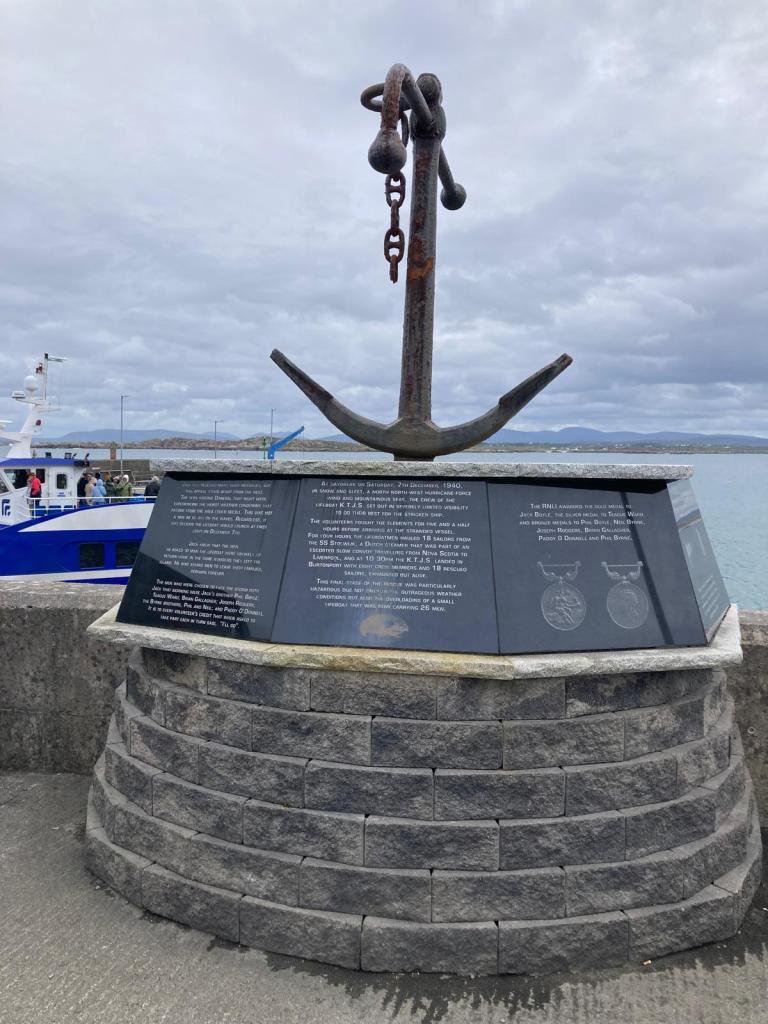
- A very important event in the history of the island was the heroic December 1940 lifeboat rescue of 18 Dutch sailors, whose ship had lost its rudder and anchor in horrible weather and was destined to sink. The ship’s Royal Navy escort wasn’t able to rescue them, but the Arranmore lifeboat crew did with no lives lost (though 14 people had already died prior to calling the Arranmore lifeboat). This rescue has its own Wikipedia page, and also Brían made a radio documentary about it which was produced by the Irish national broadcaster RTÉ. Andrew Early, whom we know and love from the previous bullet point, was 9 years old when this happened, and was the last remaining person who remembered it when Brían made his documentary, so was instrumental to that story (he was only 9 at the time though, so he obviously wasn’t in the boat). Much of the renewed attention on this event was instigated by Andrew’s son Jerry Early, who wrote a song about it called I’ll Go in 2015, to commemorate the 75th anniversary. That song received significant airplay in Northwest Ireland, and the money that Jerry earned from it went into erecting a monument to the rescue on the island.
As for the rest of the Archive, it was small but full, and the woman working there was very friendly and happy to show us around. Most of what was visible was printed music and books about Irish music, both inside and outside Ireland (obviously there are large Irish populations in the UK, USA, Canada, Australia, etc, each with their own traditions). They also had some cool fiddles made out of non-traditional materials, like tin or a wooden orange crate (Ireland has traditionally been wealthier in culture and vibes than in cash-money).

As for the man who set us up on the computer, he is a poet named Martin Dyar. Because everyone in this niche world of Irish whimsical folk music seems to know each other, he told us that he had worked with Brían not long ago on a radio production. Brían does an RTÉ radio series on the birds of Ireland, because of course he does, and Martin contributed poetry about skylarks for the episode about skylarks. He was in the ITMA that day to meet with a friend of a friend, a young American man named David. David had traveled from Iowa on his own musical journey to discover the music of his ancestors (also from Donegal), and Martin was helping him get started on that journey. David is a very good violinist, so it was really cool to hear him play the orange crate fiddle, and especially odd hearing him play beautiful classical violin on it. Disclaimer: David may have been named Daniel, and he may have been from a different midwestern state, but I’m about 60% sure I’ve got his name and home state correct, but anyway I’m close.

As we left, Martin wished us “Go n-éirí an bóthar libh”, which means “May the road rise to meet you” (plural). Anyway, as I intend to track down Martin and send him this blog, thank you and David for being on our road, and for being so enthusiastic in sharing your traditions with us and David and pointing us in the right direction for our further explorations.
Sligo
We left the ITMA around 4 pm and headed west. We’d planned to stay that night in Doolin, also famous for traditional music, before taking the ferry to the Aran Islands the next day. Once we were in the car, we considered whether we should stick with that concept, because both Doolin and the Aran Islands are known to be nice places to visit as a tourist, or change course to the correct Arranmore Island, which obviously had a very good folk music tradition, but was an unknown quantity in terms of visiting with no prior connections. It wasn’t a difficult decision – we decided that the potential upside of the types of unique experiences we’d have on Arranmore were far greater than the downside of just not finding any music at all.
So while I drove, Theresa pored over the navigational charts of Ireland (read: Google Maps), and we decided to stay the night in Sligo, a small port city just a bit south of Donegal. This is now a Wednesday night, so the smaller villages on the way didn’t have any midweek live music options, and really our main objective was to have some kind of music every evening.
We’d heard the place to go for music in Sligo was a pub called Shoot the Crows. There were three musicians there playing the guitar, mandolin, and cello (plus singing), and a bit of a crowd assembled around them. They were much more polished and rehearsed than other music we had heard, so it was clear they were an actual band. They also played a unique fusion of Irish and Spanish music (imagine, if you will, a flamenco jig).
Afterwards we spoke to them and learned that they are half of a bigger band called No Crows (they got their start playing at Shoot the Crows, and if you shot all the crows, there would be No Crows). They’ve released like 10 albums and have toured internationally, but even they were seated at tables in the bar, no better or worse than their audience. It occurred to us then that it must be really exhausting to be a professional musician in Ireland, because your tours will consist of playing in a pub in every town in the country, rather than in theaters and other large venues in a select few larger cities.

Arranmore Island
On Thursday morning, we headed the rest of the way to Burtonport, Donegal, from where the ferry leaves to Arranmore. It’s a short ferry journey (maybe 10-15 minutes), with enough space for 8 or 9 cars on deck (including ours). It was very windy, which allowed me to take this dumb picture with my hood inflated in the wind.

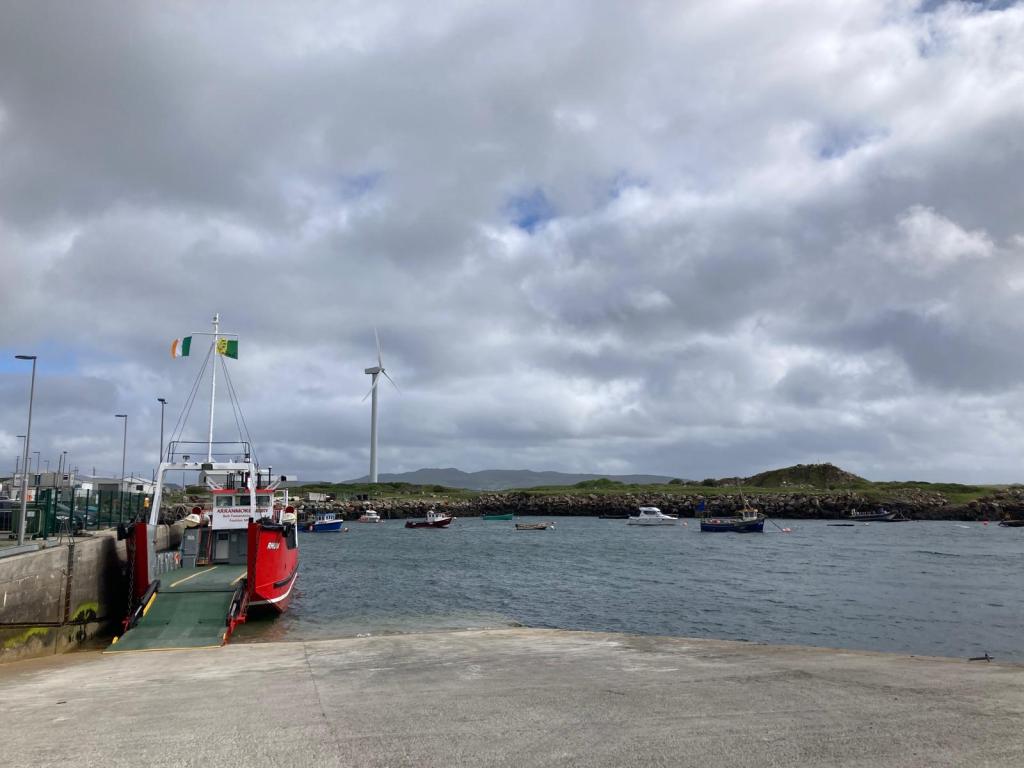
We arrived and checked into the Glen Hotel, which was referenced several times in Brían’s article, so we knew it was a center of folk activity on the island. As we checked in, we quickly came to suspect that we were the only ones staying there. As it turns out, Arranmore is much better visited on the weekend, when the residents are more likely to be out and about, and there are weekend visitors from the mainland. This was a slightly disappointing realization, but we had no choice but to make do with it.
We went on a very windy hike up to the top of the island and tried to play some music through the gales, though this was a bit of a challenge.
Recognizing that there was going to be no music made at our hotel, we did the next best thing and headed to the pub (also we needed to eat). The only pub that was open was called Early’s Bar. Remember our Late friend Andrew Early, and his son Jerry? This is their establishment, so this seemed promising.
We walk in with our guitars, and there is one person sitting at the bar, one table of 5-6 customers, a bartender, and someone working back of house. The table, perhaps themselves also disappointed at the lack of zhuzh on Arranmore on a Thursday night, see the guitars and light up. They’re all Irish and Scottish, and are visiting relatives who live there. We started singing for them (I think a mix of rowdy bar songs and gentler folky harmonies), and tell them the story of our journey. After a few songs, they decide that Jerry has to be here for this. So they text him and also check in with the bar staff, who happen to be Jerry’s son and daughter.
Jerry responds that he’s busy with Lifeboat meetings (he’s on the board of that branch of the Royal National Lifeboat Institute, and there’s been some sort of incident earlier that day), but that he’ll come in an hour when the meetings are done.
An hour later, Jerry turns up. We play him a song, and then he grabs his guitar (which he keeps there) and starts playing his song I’ll Go about the 1940 lifeboat rescue. By the second verse or so, we’ve started to figure out harmonies for the chorus, as you may be able to hear in the audio. We’ve since learned it fully ourselves, so it is now in the repertoire.
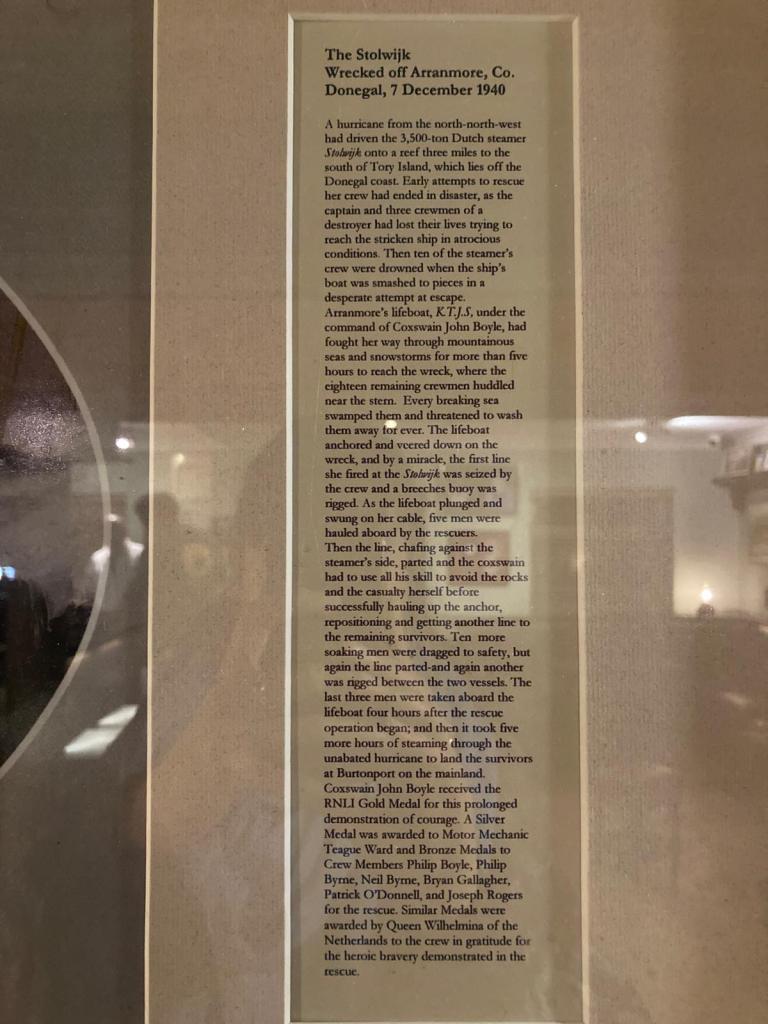

Sensing our interest in all of these things, he then tells us the story of working with Brían on the radio documentary about the rescue and how they took it on the radio documentary award circuit. It won the prize for best original score at the Irish radio documentary awards (based on Jerry’s song, plus music that Brían wrote and recorded specifically for the documentary). Then it won the same prize at the European awards. And then it was time for the world awards in New York. “I don’t talk about this often”, he says with a sly grin as he grabs a trophy from behind the bar, “but we f***in’ won that too!”
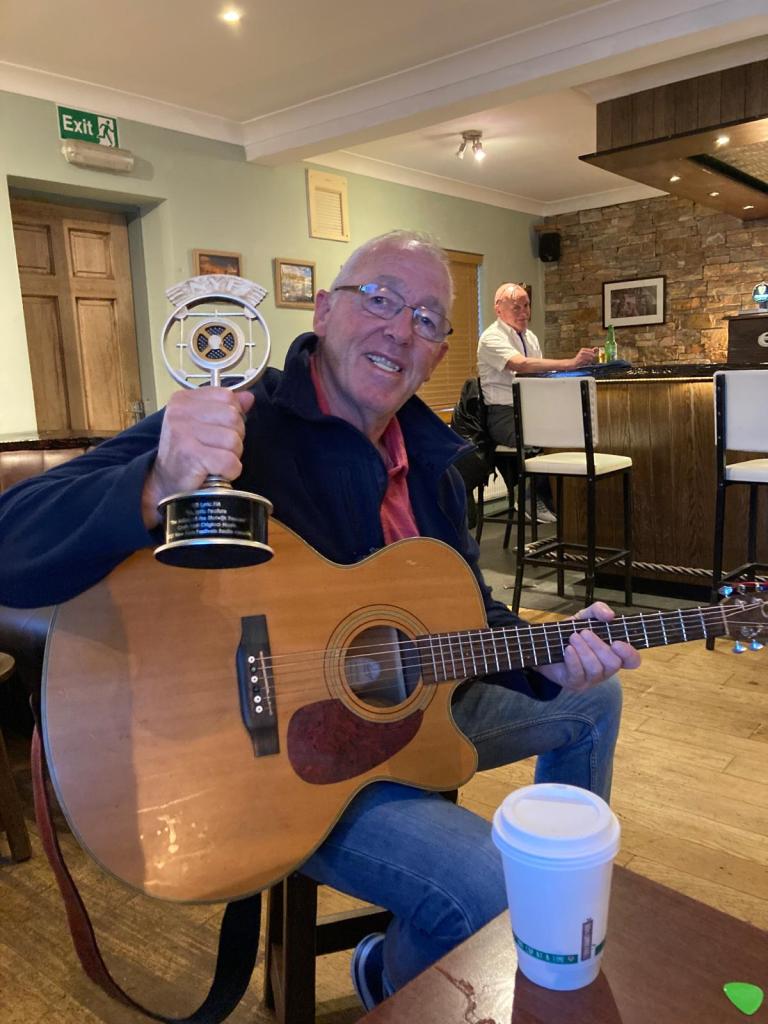
Since it was an RTÉ production, the trophy itself originally lived in their offices in Dublin, which fine folks of Arranmore didn’t think was right. Through means that I will not reproduce faithfully here, the trophy was requisitioned clandestinely out of the RTÉ offices and brought to Jerry’s bar. Coincidentally about a week later, the suits at RTÉ decided that the trophy belonged on Arranmore and offered to send it there, to which Jerry was able to essentially say “no bother, I’ve already got it”.
We spent the next hour or so trading songs. Another highlight was his version of Little Musgraves (which I think was the original English version), whereas I’m familiar with the American version, known as Matty Groves, which is substantially different but clearly still the same song/story. I think he knew every song that we played for him, many of which were not Irish.
Just as he was about to head home (since he’d had a long day), I started playing Paradise by the American folk singer John Prine, which I figured he would know because: Prine had a lot of ties to Ireland; that song in particular sounds fairly Irish; and it is very much a tale of the scrappy underdog against the big coal company, which isn’t thematically far from any number of Irish songs about the English. I was right. He immediately turned on his heel, picked up his guitar, and we sang it as loud as we could together while stomping around the bar.
As he was leaving, he told us not to play any more music until he was out of earshot, because he knew he wouldn’t be able to resist, but really he did need to sleep. What a nice sentiment.
After playing, we chatted for a while with the bartender, Jerry’s son Paul (I think). He told us that during the Famine in the 1850s, many people from Arranmore emigrated to the US, specifically to Beaver Island out in the middle of Lake Michigan. Because Beaver Island is quite remote (a two hour ferry from Traverse City, MI), the Arranmore culture, including all of the music, is very well preserved. They have recently been “twinned” as islands, and Arranmore hosted the Beaver Islanders a few years ago and were struck by how similar they all were. The reverse event is happening in September in Beaver Island, and I’m slightly considering making the trip to see some of my new Arranmore friends there.
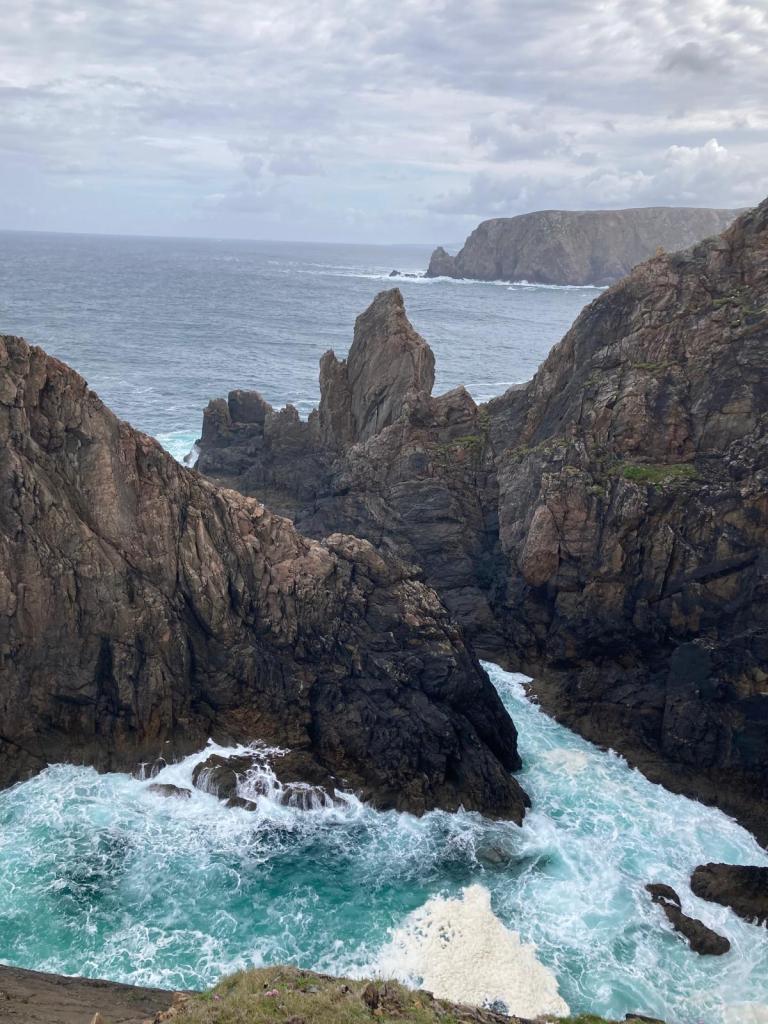
The next morning, we drove to the lighthouse on the far side of the island, on the Atlantic Ocean. Dramatic cliffs and pretty lakes, including a nice little monument commemorating the relationship with the Beaver Islanders.

Mainland Donegal
We took the ferry back to Burtonport on Friday, then headed to the national park in the area for a little bit of hiking.
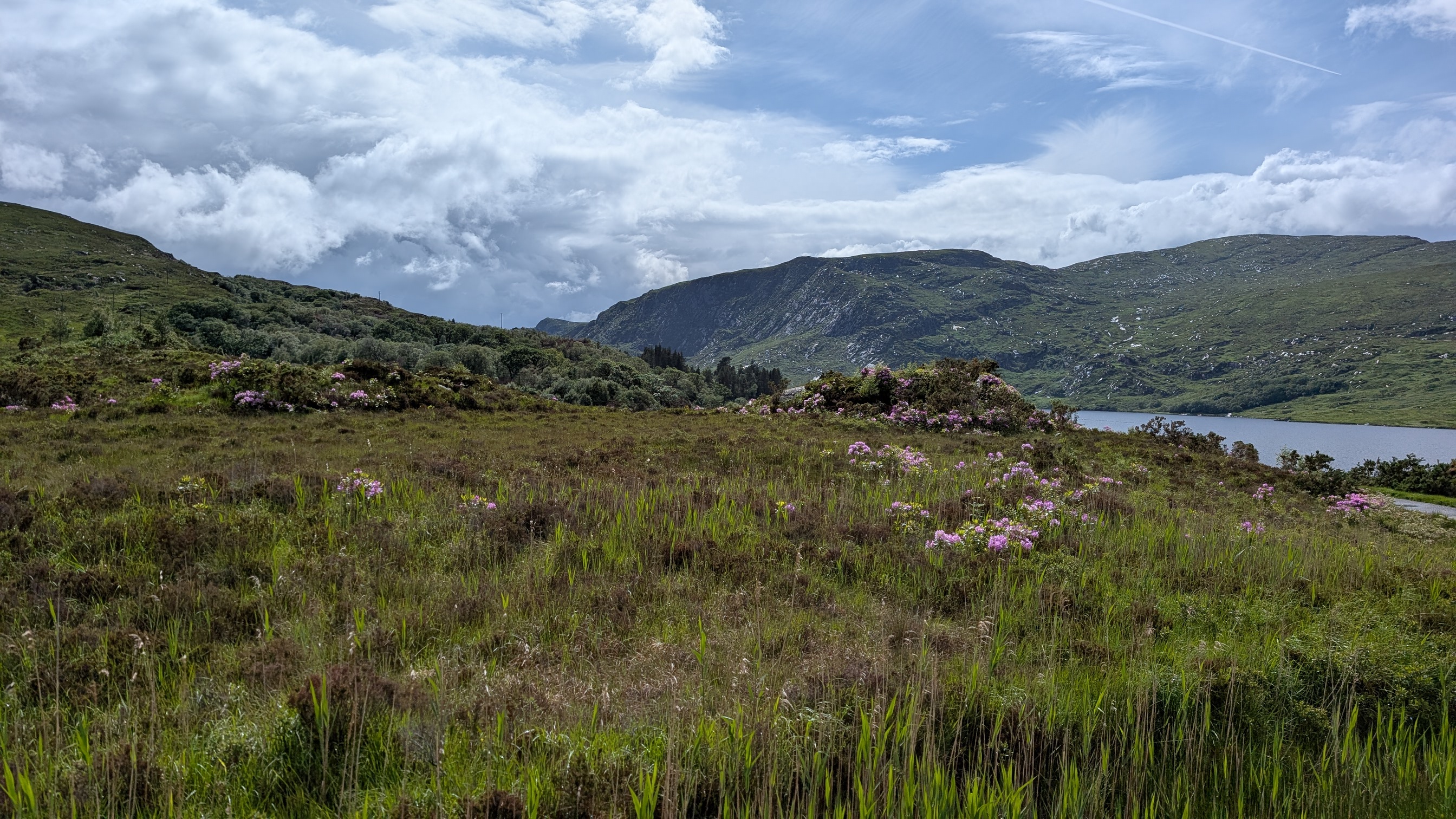
From there, we stopped by the home of the cousins of some close family friends, a couple in a small village with two teenaged kids. Though we’d never met, they were so gracious to open their house to us and further exchange some music. None of them played for us directly, but the mother’s family has a tradition of fiddling, so she showed us several videos of her (since-deceased) dad and uncles playing fiddle in their barn.
We stayed there for a couple of hours before heading to Donegal Town to see the Friday night scene there. That was very rowdy. The music was a bit more bar oriented, but still played seated by two young women on a guitar (plus singing) and a squeeze box. They were also open to sharing the “stage”, so while the guitarist was off getting a beer or in the bathroom, I accompanied the melodeon player on a traditional tune, fortunately all practiced up from our night in Dublin.
After they finished their set, we joined a table of bargoers and passed around my travel guitar singing songs until the bar closed.
The next morning we headed towards Dublin to visit a friend of Theresa’s in County Cavan. That was also really nice, but I’ll finish my travelogue here.
Takeaways
In no particular order, here are some things that stuck out on this journey:
- I’ve mentioned throughout how integrated live music is in society, both in terms of it being everywhere, and it being played simply by the folks for the folks. That’s probably my biggest takeaway anyway.
- My main area of musical interest generally is in American folk music. I’ve known for a long time that it derives in a significant way from music of Britain and Ireland, especially the songs and the melodies, but with African rhythmic structures. I really enjoyed tracing that lineage back, for example hearing Jerry sing an English/Scottish version of a song I know as an American song.
- So many people were so friendly along the way. I got the sense that most people were genuinely interested in our passion for our little quest and wanted to be able to further that however they could. Big shoutouts especially to Martin and Jerry, but all the smaller conversations we had in bars along the way were also very welcoming and engaging.
- It was the perfect journey in terms of my style of travel, doing just enough research to have some threads to pull on, but not planning so much that we couldn’t change direction at a moment’s notice. We never booked anywhere to stay until the day of. Theresa was also the perfect travel partner for this trip – aside from our shared musical interests, we really complemented each other’s sense of adventure very well, with my ability to connect with people musically, and her ability to have a conversation with just about anyone and steer the plans towards the most adventurous plan possible. I’m quite certain that neither of us would have had the experience that we had without the other’s contributions.
That’s all for now. Hope you enjoyed reading it as much as I enjoyed writing it, and I’ll write another post on some other musical topic soon.
Until then, go n-éirí an bóthar leat!


Great piece! Really enjoyed this one. I’d love for you to check out my latest work at storefrontsubway.com, if you’re interested! Always looking to get some feedback!
LikeLike
Soren – this was such a fun surprise!! I saw the blog name in my inbox and had to double-take. I loved reading this and hope all is well in your world 🙂
Stacy
LikeLike
Thanks! It was fun to write and relive the experience as I did it! I’ll try to do this more often – somehow it feels like less of a chore than posting on instagram, which I never do.
All good here in California. Hope you make it out again soon!
LikeLike
Such a beautiful and informative piece to read! I really liked how spontaneous your journey was, and also the details about the people you met. The video snippets were a nice touch also. Brava!
LikeLike